Living off the grid means taking control of your own resources, and water is one of the most important ones. Rainwater collection gives you a free, sustainable water source that can meet most or all of your household needs when set up correctly.
You can use collected rainwater for drinking, cooking, washing, and watering plants without relying on city water or expensive well drilling.
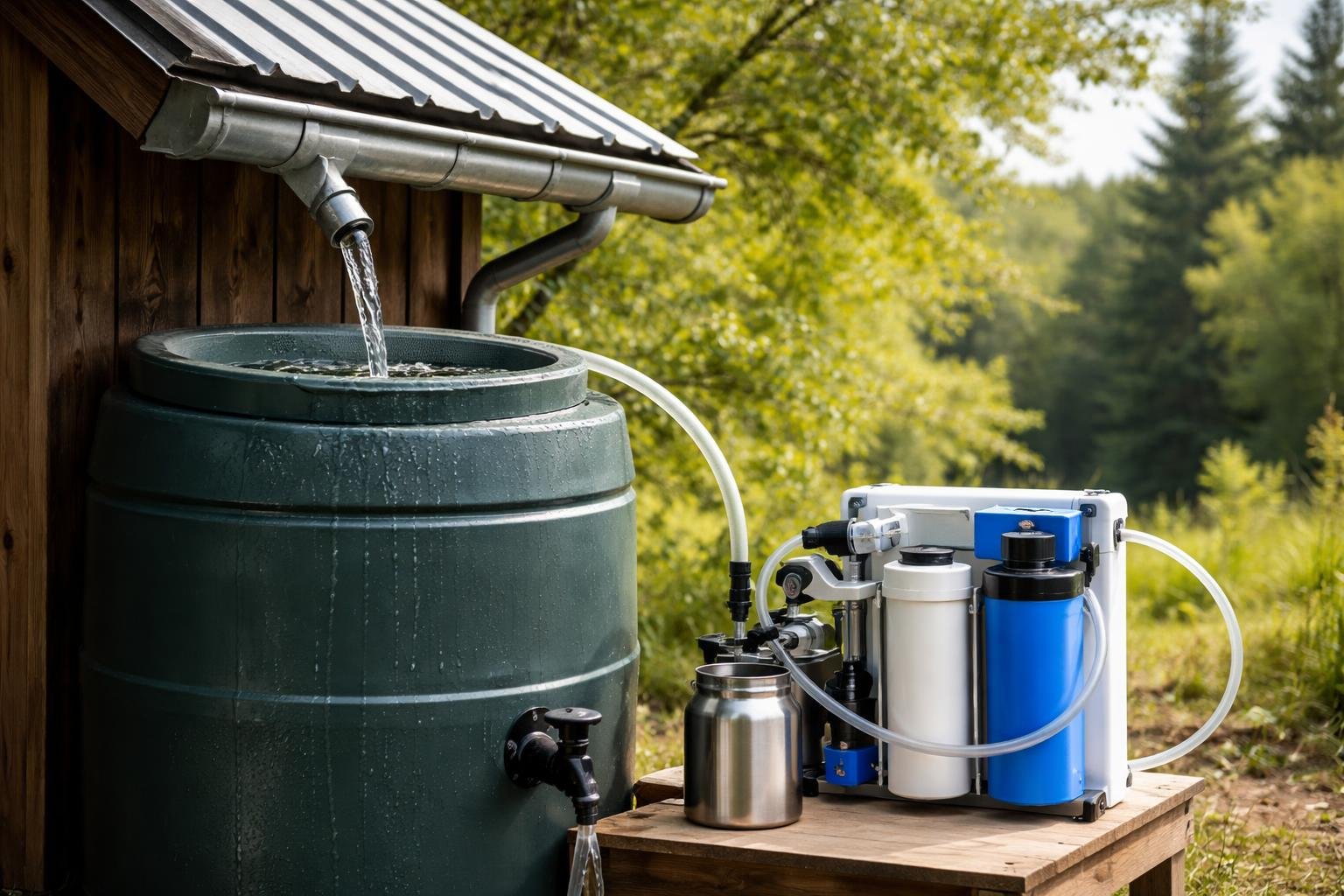
Setting up your own rainwater harvesting system might seem complicated at first. It breaks down into simple steps.
You need a clean surface to collect from, gutters to direct the water, tanks to store it, and filters to make it safe. Once you understand these basic parts, you can build a system that matches your needs and budget.
The path to water independence starts with understanding how much rain falls in your area and how much water you actually use each day. From there, you can design a collection and filtration setup that keeps clean water flowing to your home year-round.
This guide walks you through everything from choosing your roof material to picking the right filters for safe drinking water.
Key Takeaways
- Rainwater collection systems need a clean catchment area, storage tanks, and proper filtration to provide safe water
- You can use gravity or pumps to move water from storage to your home depending on your setup
- Regular maintenance like cleaning gutters and testing water quality keeps your system running efficiently
Essentials of Off-Grid Rainwater Collection
A rainwater collection system captures water from your roof and stores it for later use. Understanding how these systems work helps you build a setup that meets your needs year-round.
How Rainwater Harvesting Systems Work
Your rainwater harvesting system starts with your roof, which acts as the collection surface. When rain falls, it flows down your roof into gutters that channel the water toward downspouts.
From the downspouts, the water enters a first-flush diverter that removes the initial dirty water containing leaves, dust, and debris. After the first flush, clean rainwater flows through filters and into your storage tanks.
Storage tanks hold the collected water until you need it. You can use gravity to move water from elevated tanks or install a pump for pressurized distribution.
The basic components include:
- Collection surface (roof)
- Gutters and downspouts
- First-flush diverter
- Filters
- Storage tanks
- Distribution system (pipes and pumps)
The size of your system depends on your roof area, local rainfall, and water needs. A 1,000 square foot roof can collect about 600 gallons from one inch of rain.
Benefits and Uses of Collected Rainwater
Rainwater harvesting provides a sustainable water supply that supports self-sufficiency and water conservation. You can use collected rainwater for multiple purposes around your property.
Common uses include:
- Drinking water (after proper filtration)
- Cooking and food preparation
- Washing dishes and laundry
- Showering and bathing
- Watering gardens and livestock
- Toilet flushing
Rainwater is naturally soft and free from chlorine, making it better for your skin and plants. You’ll reduce water bills to zero if rainwater becomes your primary source.
Off-grid living becomes more practical when you control your water supply. You won’t depend on municipal systems or worry about water restrictions during droughts.
Your rainwater harvesting system also provides backup water during emergencies.
Designing for Water Independence
Planning your off-grid water system requires calculating how much water you need and how much you can collect. Start by tracking your daily water use for all activities.
The average person uses 50-100 gallons per day, but off-grid living often reduces this to 20-30 gallons through conservation. Multiply your daily needs by 30 to find your monthly requirement.
Key design factors:
| Factor | Consideration |
|---|---|
| Roof size | Larger roofs collect more water |
| Local rainfall | Check annual precipitation data |
| Storage capacity | Store 1-3 months of water minimum |
| Household size | More people need more storage |
| Seasonal variation | Plan for dry periods |
Your storage should cover you during the longest dry spell in your area. If your region gets 40 inches of rain annually but has three dry months, you need enough tank capacity to last through that period.
Calculate your collection potential by multiplying roof square footage by rainfall in inches, then by 0.6 to account for losses.
Choosing and Preparing Your Collection Area
Your roof serves as the main catchment surface for rainwater. The material you choose affects water quality while proper gutter setup determines how much rain you actually capture.
Selecting the Right Roof Surface
Not all roofs work equally well for collecting rainwater. Metal roofs are your best choice because they’re smooth, durable, and don’t shed harmful chemicals into the water.
Asphalt shingles also work but can release small amounts of petroleum-based compounds, especially when new. Avoid painted surfaces unless you know the paint is non-toxic.
Cedar shake roofs can add tannins to your water, giving it a brown tint. Treated wood shingles may contain chemicals you don’t want in your water supply.
The roof should slope enough to drain properly but doesn’t need to be steep. Clean your roof collection area regularly to remove leaves, bird droppings, and debris that can contaminate your water.
A simple monthly sweep or rinse keeps the surface ready for the next rainfall.
Calculating Roof Collection Potential
You can estimate how much water your roof will collect with a simple formula. Multiply your roof’s square footage by 0.623, then multiply that number by the inches of rainfall.
This gives you gallons of water per rain event. For example, a 1,000 square foot roof during a 1-inch rainfall yields about 623 gallons.
Track your local rainfall data to estimate annual collection amounts.
Basic Collection Formula:
- Roof square footage × 0.623 × rainfall inches = gallons collected
- Remember to account for about 10-20% loss from evaporation and splash
Larger roof sections collect more water, so focus your collection efforts on the biggest unobstructed areas. Multiple downspouts from different roof sections can feed into the same storage tank to maximize your harvest.
Gutters and Downspouts Selection and Placement
Your gutters channel water from the roof to storage tanks, so they need to be properly sized and positioned. Use gutters that are at least 5 inches wide for most residential roofs.
Slope them about 1/4 inch per 10 feet toward the downspouts. Install mesh screens or leaf guards at the gutter opening to catch debris before it enters your system.
These simple filters save you from constant maintenance and keep larger contaminants out. Downspouts should be 3 to 4 inches in diameter to handle heavy rainfall without overflowing.
Place them at corners or every 35 feet of gutter run. Connect downspouts directly to your storage system or use a first-flush diverter to remove the initial dirty runoff.
Check your gutters twice a year minimum and after major storms. Clear out accumulated leaves, check for leaks, and make sure water flows freely to your collection point.
Directing and Storing Rainwater Safely
Once you’ve collected rainwater from your roof, you need proper storage containers. A system that handles excess water prevents problems around your property.
Storage Tanks and Cistern Choices
Rain barrels are the simplest option for beginners. They typically hold 50 to 55 gallons and connect directly to your downspout.
You can find them made from recycled plastic or buy new ones at most hardware stores. For larger water needs, storage tanks offer more capacity.
A polyethylene tank is lightweight, affordable, and comes in sizes from 100 to 10,000 gallons. These tanks resist UV damage and won’t rust or corrode over time.
Cisterns provide even greater storage volume for serious off-grid living. An underground cistern keeps water cool and out of sight, though installation requires excavation.
A concrete cistern can last decades and holds thousands of gallons, but costs more upfront than plastic options. Food-grade containers are essential if you plan to use the water for drinking or cooking.
Dark-colored tanks prevent algae growth by blocking sunlight.
Overflow Management and Installation
Every storage system needs an overflow outlet to prevent water from spilling where you don’t want it. Without proper overflow management, excess water can flood your foundation or create muddy areas around your property.
Install an overflow pipe near the top of your tank or barrel. The pipe should direct water at least 10 feet away from buildings and into a drainage area, rain garden, or secondary storage container.
Most rainwater collection systems include a built-in overflow system with threaded fittings. You’ll need to attach a hose or PVC pipe to carry water away.
Make sure the overflow outlet sits higher than your spigot to prevent the tank from draining through the wrong opening. Position your storage container on a stable, level surface.
A concrete pad or compacted gravel base works well. Elevating your tank 1 to 2 feet off the ground increases water pressure at the spigot.
Connecting Multiple Barrels or Tanks
You can link multiple barrels together to increase storage capacity without buying one large expensive tank. This setup also balances water levels automatically between containers.
Connect barrels using overflow pipes at the top or spigot connections near the bottom. The top connection method is easier because water flows from one full barrel into the next.
You’ll need a short length of garden hose or PVC pipe with fittings that match your barrel openings. For bottom connections, install a valve between containers so you can isolate one barrel for maintenance.
Keep all connected barrels at the same height so water distributes evenly. When you link multiple barrels, place them on a single platform to maintain level alignment.
Three 55-gallon barrels connected together give you 165 gallons of storage using your existing downspout location.
Filtration and Water Quality Systems
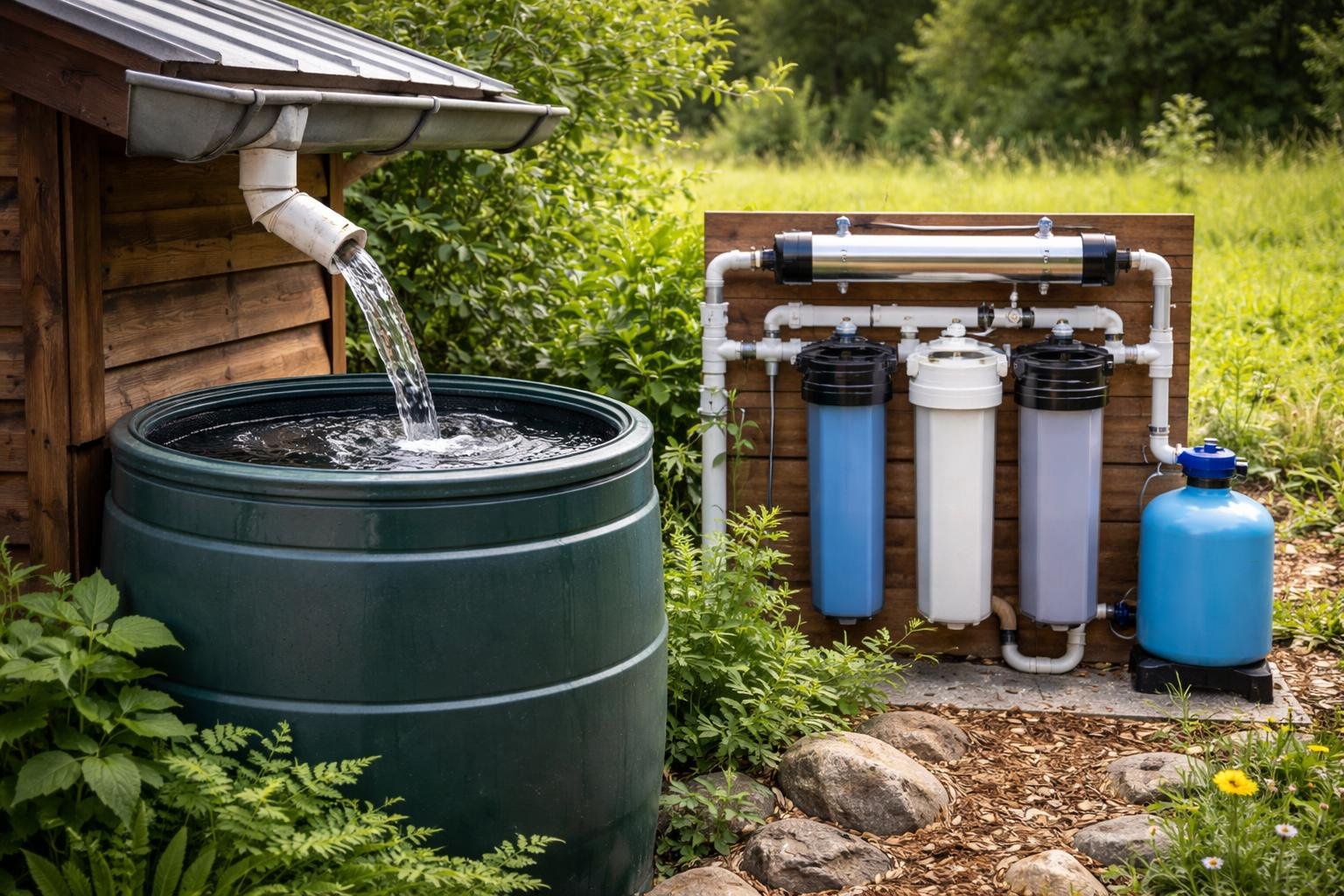
Filtering rainwater properly protects your health and extends the life of your storage tanks and plumbing. A good filtration setup removes debris, sediment, chemicals, and harmful organisms through multiple stages of treatment.
First-Flush Diverters and Pre-Filtration
A first-flush diverter captures the dirtiest water that runs off your roof at the start of each rain event. The first gallon or two picks up bird droppings, dust, pollen, and other contaminants that settle on your roof between storms.
The diverter works by filling a chamber with this initial runoff before letting cleaner water flow to your storage tank. Once the chamber fills, a floating ball or valve seals it off automatically.
First-flush diverters can prevent up to 90% of roof contaminants from entering your main system. You should size your first flush diverter based on your roof area.
A common guideline is 0.5 gallons of diversion capacity for every 100 square feet of collection surface. After each rain, you’ll need to open the drain valve to empty the chamber.
Selecting Mesh and Sediment Filters
Mesh screens provide your next layer of defense against leaves, twigs, pine needles, and other visible debris. You can install mesh filters in your gutters, downspouts, or at the tank inlet.
Mesh Filter Types:
- Coarse mesh (1000-5000 microns) – blocks leaves and large debris
- Medium mesh (500-1000 microns) – catches pine needles and seed pods
- Fine mesh (100-500 microns) – traps sand and silt particles
Self-cleaning mesh filters save you maintenance time. Dome-shaped designs let debris slide off naturally.
Some models use water pressure to spin and clear themselves automatically.
Sediment filters handle particles that make it past your mesh screens. These cartridge-style filters typically use wound polypropylene or pleated material.
You’ll need to replace sediment filter cartridges every 3-6 months depending on your water quality and usage.
Multi-Stage Filtration Options
Multi-stage filtration tackles contaminants of different sizes through a series of filters arranged in sequence. Each stage removes specific types of particles or pollutants.
A basic three-stage system might include a sediment filter, followed by a carbon filter, then a final polishing filter. More advanced setups add ceramic filters or sand filtration stages.
Slow sand filtration uses biological processes where beneficial bacteria develop naturally over 2-3 weeks to break down contaminants.
The key is positioning filters from largest to smallest micron rating. This prevents fine filters from clogging prematurely with debris that earlier stages should catch.
Your pre-filters handle bulk removal while later stages polish the water to your desired quality level.
Advanced Purification: Carbon Filters and UV Sterilization
Carbon filters remove chemicals, odors, and tastes that other filters miss. Activated carbon has millions of tiny pores that trap chlorine, pesticides, and volatile organic compounds as water passes through.
You should place carbon filters after sediment removal but before final disinfection. These filters don’t remove bacteria or viruses, so they work best as part of a complete filtration system.
Most carbon filter cartridges need replacement every 6-12 months.
UV sterilization provides the final defense against harmful microorganisms. The UV lamp exposes water to ultraviolet light that damages the DNA of bacteria, viruses, and parasites so they can’t reproduce or cause illness.
Solar-powered UV systems work well for off-grid setups and include battery backup for cloudy days.
You’ll need to replace UV bulbs annually even if they still light up, since their germicidal effectiveness decreases over time. If you plan to use rainwater for drinking or cooking, UV sterilization becomes essential after all other filtration stages.
System Setup and Off-Grid Water Delivery
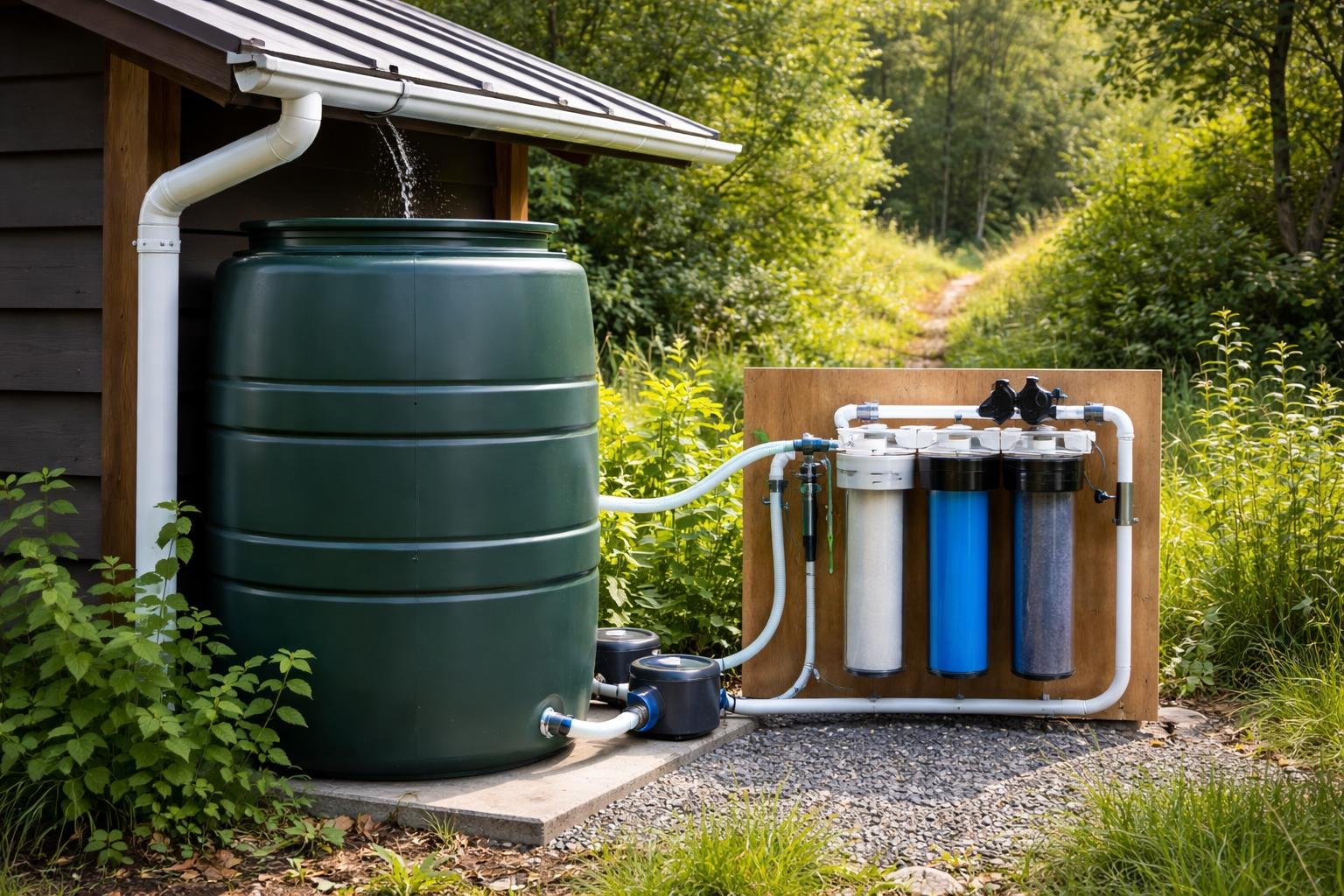
Once you’ve collected rainwater, you need a smart way to move it where it’s needed. Elevation gives you free pressure through gravity, while drip systems stretch every gallon further in your garden.
Platform Elevation and Gravity-Fed Systems
Raising your storage tank creates water pressure without pumps or electricity. Every 2.31 feet of height gives you 1 PSI of pressure at the tap.
A gravity-fed system works by placing your tank on a platform, hill, or roof. If you build a 10-foot platform, you’ll get about 4.3 PSI.
That’s enough for basic garden watering but not quite enough for a comfortable shower, which needs around 20-30 PSI.
Most off-grid setups aim for 15-20 feet of elevation to hit 6-9 PSI. You can build platforms from treated lumber, concrete blocks, or steel framing.
Make sure your foundation is level and can handle the weight—a 500-gallon tank weighs over 4,000 pounds when full.
Platform height considerations:
- 10 feet = ~4 PSI (garden watering)
- 15 feet = ~6.5 PSI (outdoor taps, livestock)
- 20 feet = ~9 PSI (basic indoor fixtures)
- 30+ feet = ~13 PSI (most household needs)
You’ll need sturdy piping from the tank base to your distribution points. Use unions and valves so you can service lines without draining the whole system.
Drip Irrigation and Rainwater for Irrigation
Drip irrigation makes your stored rainwater go much further than sprinklers. It delivers water directly to plant roots with almost zero waste.
Rainwater for irrigation is ideal because it has no chlorine or salts that can build up in soil. A basic drip setup includes a main line, smaller branch lines, and emitters that release water slowly at 0.5 to 2 gallons per hour.
You can run drip lines straight from a gravity-fed rainwater tank with just 5-10 PSI. Add a simple sediment filter at the tank outlet to keep emitters from clogging.
Lay your drip lines in rows along plant beds. Stake them down so they don’t shift.
Most gardeners space emitters 12-18 inches apart for vegetables and closer for container plants. Run your system for 30-60 minutes every few days instead of daily light watering.
This encourages deeper root growth and uses less total water.
Installation and Fitting Components
Your installation starts with measuring pipe runs from tank to end points. Use PVC, polyethylene, or food-grade hose depending on whether lines are buried, exposed, or temporary.
Cut pipes square and deburr the edges. Apply primer and cement to PVC fittings, or use compression fittings for polyethylene—no glue needed.
Always install a ball valve near the tank so you can shut off flow for repairs.
Key components you’ll need:
- Ball valves (tank outlet, branch lines)
- Unions (makes removal easy)
- Sediment filter (100-200 micron)
- Pressure gauge (tracks system health)
- Backflow preventer (if connecting multiple sources)
Test every joint before burying lines. Turn on the water and check for leaks at each connection.
Mark valve locations with stakes if they’ll be underground.
Maintenance means checking filters monthly during heavy use and flushing lines at the start of each season. Drain exposed pipes before winter to prevent freeze damage.
Maintenance, Efficiency, and Seasonal Care
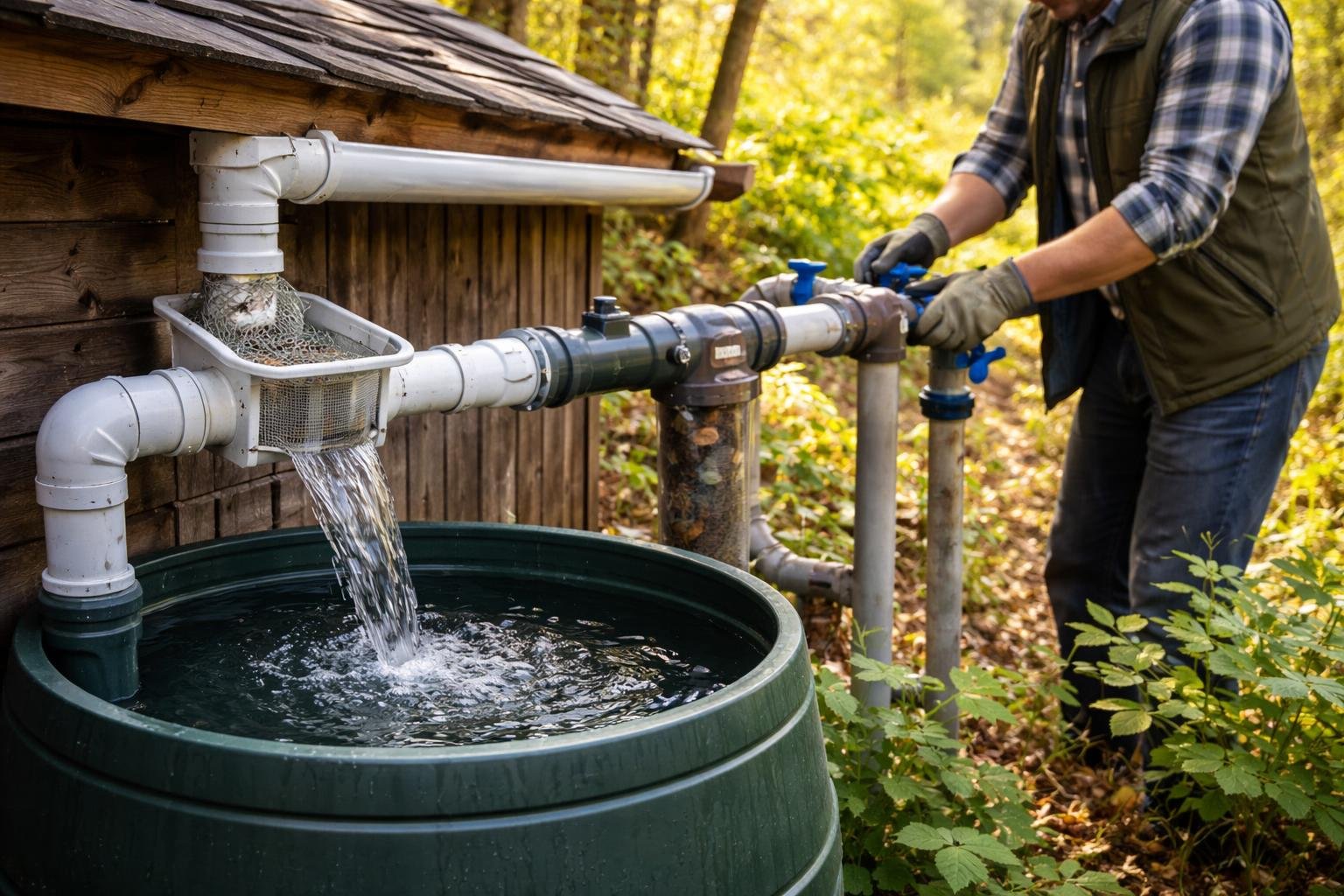
Regular upkeep keeps your off-grid rainwater system running smoothly and prevents costly repairs. Different seasons bring unique challenges that require specific attention to filters, tanks, pipes, and catchment areas.
Inspecting and Cleaning Components
You need to check your gutters and catchment areas at least once a month. Leaves, twigs, and debris collect quickly on roofs and in gutters, which can clog your system and reduce water quality.
Clean your catchment surfaces by removing all visible debris and rinsing them down. Installing leaf guards or gutter screens cuts down on how often you need to clean these areas.
Check your first-flush diverter after every rainfall. This device catches the dirtiest water from the initial rain, so it needs regular flushing to work properly.
Empty it completely and rinse it out to prevent sediment buildup.
Look over all visible pipes and connections for cracks or damage. Small leaks waste water and can lead to bigger problems if you ignore them.
Leaks, Winterization, and Weather Protection
Inspect pipe joints and tank connections every few months for signs of leaking. Even small drips add up over time and can contaminate your water supply.
Winter protection is critical if you live in cold climates. Water expands when it freezes, which can crack pipes and damage tanks.
Drain all exposed pipes before temperatures drop below freezing. Wrap vulnerable pipes with heat tape or foam insulation to prevent freezing.
You can also install shut-off valves that let you isolate and drain specific sections of your system during winter months.
If you can’t drain your storage tank, insulate it heavily or move stored water to a heated area. Some people bury their tanks below the frost line to avoid freezing issues altogether.
Routine Filter and Tank Maintenance
Your filters need attention every few weeks during active use. Rinse them with clean water to remove accumulated dirt and particles.
Replace filters when they show signs of wear or stop working effectively. Schedule a full tank cleaning every 6 to 12 months.
Sediment and algae can build up inside, affecting water quality even if you can’t see it.
To clean your tank:
- Drain all water completely
- Scrub walls and bottom with a non-toxic cleaner
- Rinse thoroughly with clean water
- Check and clean the tank’s inlet and outlet screens
- Seal the tank tightly after refilling
Keep your tank covered at all times to prevent algae growth and keep out insects or animals. Light exposure promotes algae, so use opaque tanks or store them in shaded areas.
Tips for System Longevity
Keep a simple maintenance log to track cleaning dates, filter replacements, and any repairs. This helps you spot patterns and catch problems early.
Test your water quality periodically, especially if you use it for anything beyond irrigation. Basic test kits check for pH, bacteria, and sediment levels.
Spring and fall are the best times for deep cleaning since these seasons typically have moderate weather and rainfall patterns.
Trim back tree branches that hang over your catchment area. This reduces debris and prevents damage to your roof or gutters.
Mark your calendar for regular maintenance tasks so they don’t slip your mind.
Frequently Asked Questions
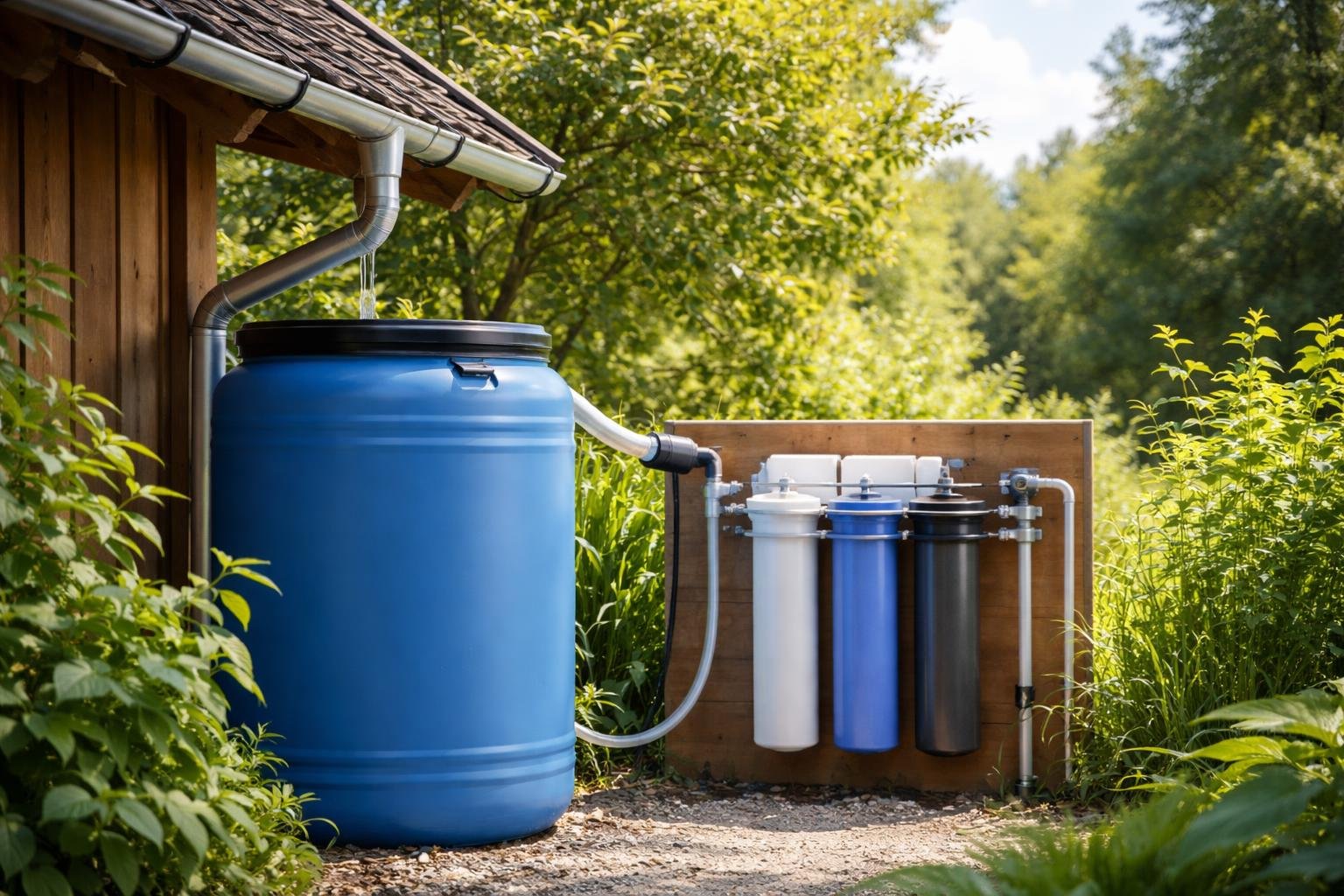
Building a rainwater collection system raises practical questions about materials, costs, and regulations. The answers below cover everything from basic barrel setups to legal requirements in your area.
What materials do I need to build a DIY rainwater collection setup?
You’ll need a few key items to get started with rainwater collection. The main component is a storage container like a rain barrel or large tank, plus gutters and downspouts to channel water from your roof.
For a basic system, grab a food-grade barrel (55 gallons works well), a spigot or valve for the bottom, and screen material to keep out debris and mosquitoes.
You’ll also want an overflow hose to redirect extra water when the barrel fills up.
Don’t forget the tools and supplies to connect everything. Drill bits, waterproof sealant, hose clamps, and flexible tubing help you put it all together.
A first flush diverter is optional but helpful since it sends the first dirty water away from your barrel.
Can I save money with a homemade rain barrel system, and how?
Yes, you can definitely save money by building your own rain barrel instead of buying a pre-made one. Store-bought systems often cost $100 to $300, while a DIY version might only run you $30 to $75 if you find used barrels.
The real savings come over time when you use collected rainwater for your garden, lawn, or washing tasks. You’ll see lower water bills each month, especially during dry summer months when outdoor water use peaks.
A rainwater collection system can reduce your reliance on municipal water, cutting costs while giving you more control over your water supply. The system typically pays for itself within one to three years depending on your water rates and usage.
What’s the best way to construct a rainwater harvesting system at home?
Start by choosing a good location near a downspout where runoff naturally flows. Your barrel or tank should sit on a stable, level platform like concrete blocks or a wooden stand to create pressure for the spigot.
Cut your downspout and install a diverter that sends water into your barrel. Make sure the top of your container has a secure screen to filter out leaves, twigs, and bugs before they get inside.
Install your spigot near the bottom of the barrel so you can easily fill watering cans or attach a hose. Add an overflow valve or hose at the top to redirect excess water away from your home’s foundation when the barrel is full.
For larger needs, you might want to look at setting up multiple storage tanks that hold hundreds or thousands of gallons. You’ll need stronger platforms and better overflow management for these systems.
How do I create an effective filter for my rain barrel?
The simplest filter is a fine mesh screen placed over the barrel opening. This catches large debris like leaves, pine needles, and bugs before they enter your water supply.
You can upgrade to a multi-stage filtering system for cleaner water. Start with a coarse screen in your gutters, then add a finer mesh at the barrel entrance.
Some people add a layer of landscape fabric or window screen material for extra protection. For drinking water quality, you’ll need more advanced filtration methods that remove particles and contaminants.
Sediment filters catch dirt and rust, while carbon filters remove chemicals and improve taste. Ceramic filters can block bacteria if you’re worried about biological contamination.
A first flush diverter acts as a pre-filter by dumping the initial dirty water that washes off your roof. This simple addition keeps a lot of contaminants out of your barrel.
What are some creative ideas for configuring multiple rain barrels?
Connecting several barrels increases your storage capacity without needing one giant expensive tank. You can link them together using short hoses or pipes near the bottom so water flows between them and keeps levels equal.
A daisy chain setup places barrels in a line where the first one overflows into the second, which overflows into the third, and so on. This works well along a wall or fence where you have limited space.
Another option is stacking barrels vertically if you have height restrictions but want more volume. The top barrel fills first and gravity feeds water down to lower barrels through connecting pipes.
You can also set up barrels at different downspouts around your house to maximize collection from your entire roof area. Just make sure each one has proper overflow protection and screens to keep them functioning independently.
Are there legal restrictions on harvesting rainwater in residential areas?
Rainwater collection laws vary widely depending on where you live. Some states and cities fully support it, while others have restrictions.
A few places technically don’t allow it at all. Many areas permit rainwater harvesting for outdoor uses like watering gardens but have rules about using it indoors.
You might need permits or inspections if you plan to use collected water for drinking, cooking, or bathing. Check with your local building department or water authority before installing a system.
Some homeowners associations also have their own rules about visible rain barrels or water storage on your property. In places where rainwater collection faces legal restrictions, the concerns usually relate to water rights or public health standards.