Building your own off-grid cabin doesn’t require a fortune. Many people think you need hundreds of thousands of dollars to make it happen, but that’s not true.
A small off-grid cabin can cost as little as $1,000 to build, while most DIY projects range from $2,200 to $30,000 depending on size and materials. The key is smart planning, finding free or cheap materials, and doing the work yourself.
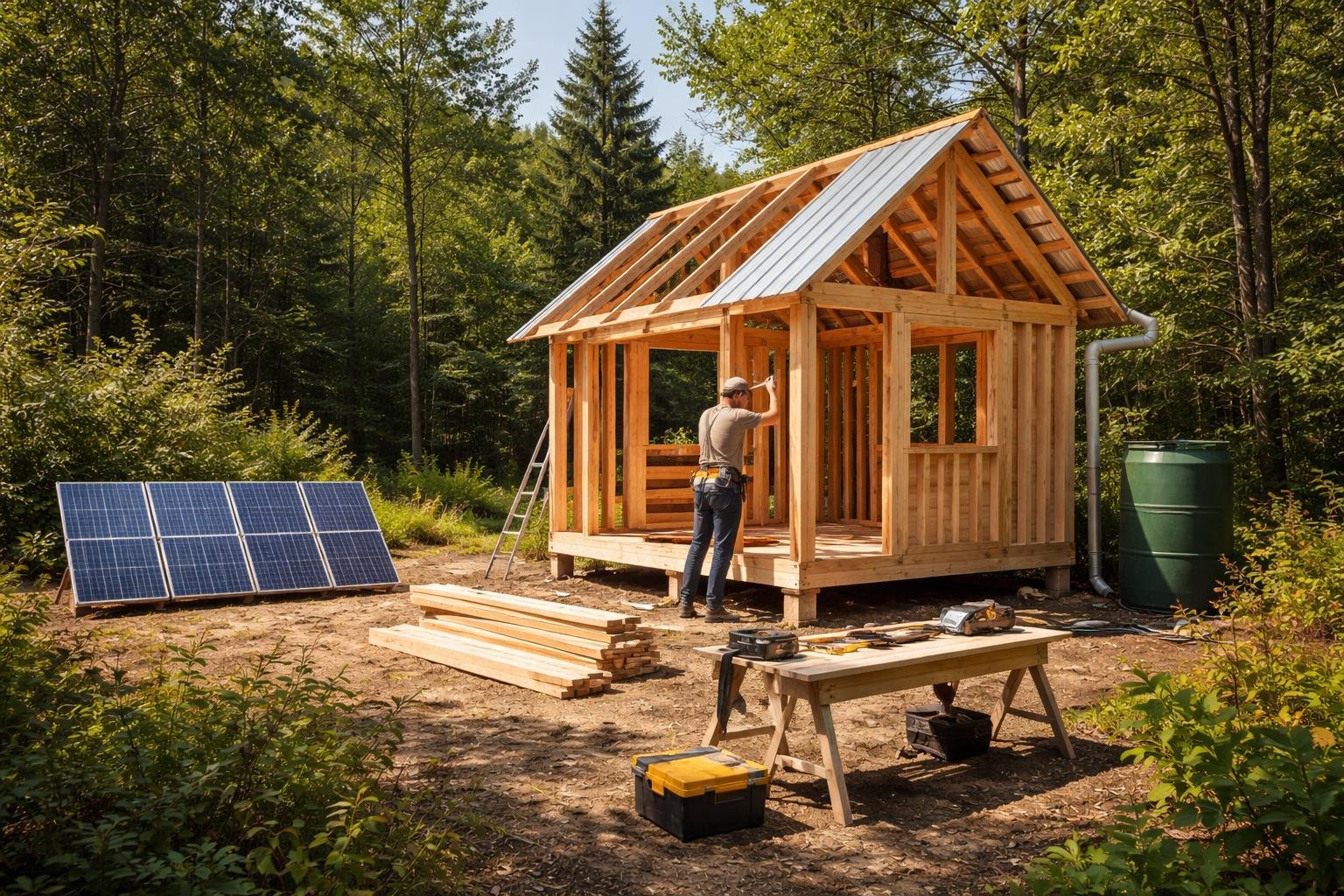
You can create a comfortable home in the woods by using what nature provides and hunting for deals on building supplies. Salvaged materials and recycled products keep costs low while adding character to your cabin.
The process takes time and effort, but thousands of people have done it successfully on tight budgets. This guide will walk you through every step of building your budget-friendly off-grid cabin.
You’ll learn where to find cheap land, how to design your space, what materials to use, and how to set up power and water systems without breaking the bank.
Key Takeaways
- Building an off-grid cabin on a budget requires careful planning, sourcing free or salvaged materials, and doing most of the construction work yourself
- Living on your construction site helps you save money on commuting costs and allows you to work more efficiently
- Setting up basic off-grid utilities like solar power, rainwater collection, and composting toilets keeps your cabin functional while maintaining low costs
Planning Your Off Grid Cabin
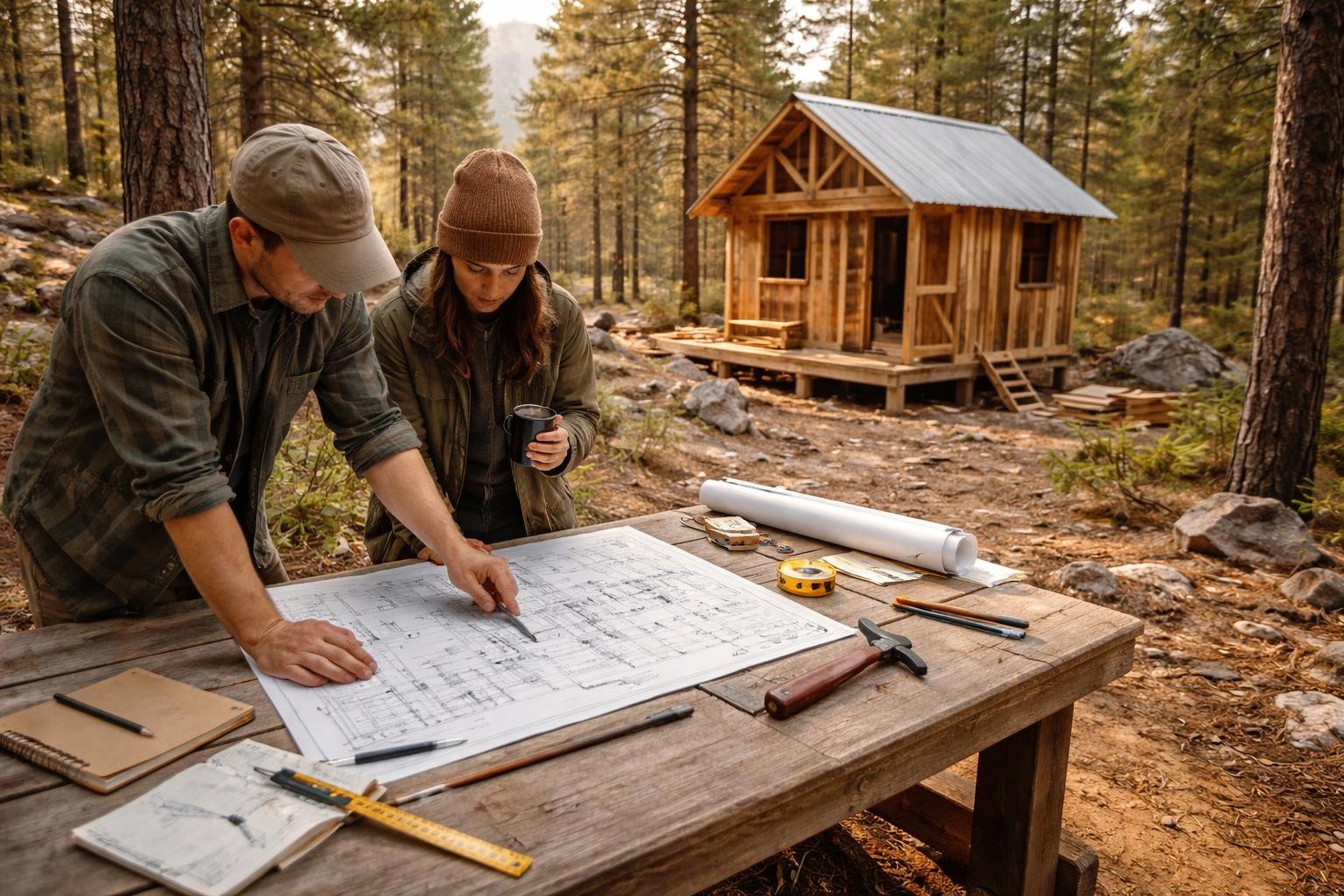
A solid plan saves you money and headaches before you cut a single board. Your budget, land choice, local rules, and design decisions all work together to determine whether your off-grid living dream stays affordable or spirals out of control.
Setting a Realistic Budget
The cost to build an off grid cabin varies wildly based on size, location, and how much work you do yourself. A basic DIY cabin can run anywhere from $10,000 to $30,000 if you keep things simple and use your own labor.
Breaking down your budget into categories helps you track expenses. Allocate funds for:
- Land purchase or lease (often your biggest upfront cost)
- Foundation materials (concrete, blocks, or stone pillars)
- Building materials (lumber, roofing, windows, doors)
- Off-grid systems (solar panels, water collection, septic)
- Tools and equipment (sawmill, basic construction tools)
Plan to keep 15-20% of your budget as a cushion for unexpected costs. Building delays, weather damage, or code requirements you didn’t anticipate can pop up.
If you’re handy and willing to source materials creatively, you’ll save thousands compared to hiring contractors.
Choosing Your Land Wisely
Finding the right land shapes everything about your cabin project. Look for property with natural resources like trees you can mill into lumber and rocks for foundation work.
Water access makes or breaks off grid living. A natural spring, creek, or good well site cuts costs dramatically compared to hauling water.
Check the water table depth before buying since drilling a well can cost $5,000 to $15,000 depending on depth. Road access matters more than you think.
Remote land is cheaper but getting materials delivered on rough roads gets expensive fast. You want land that’s accessible enough for deliveries but remote enough for privacy and lower property taxes.
Understanding Local Regulations
Building codes and zoning laws affect whether you need to submit cabin plans for approval. Some rural areas have minimal requirements for small cabins under 200 square feet, while others require full permits regardless of size.
Call your county building department before buying land. Ask about:
- Minimum dwelling sizes
- Septic system requirements
- Electrical code compliance
- Distance setbacks from property lines
- Whether composting toilets are allowed
Some counties require dwellings to connect to the grid even if you don’t want to. Others let you build freely as long as the structure isn’t a primary residence.
Designing for Sustainability
Your cabin design plans should maximize self-sufficiency while minimizing ongoing costs. Start small—an 8×8 or 12×16 footprint gives you enough space without breaking your budget.
Orient your cabin to capture southern sun exposure for passive heating and solar panel efficiency. Large south-facing windows let in winter warmth while roof overhangs block harsh summer sun.
Think of your cabin as a system where energy, water, waste, and heat all work together. Plan for a loft to maximize sleeping space without expanding your foundation.
Use local materials whenever possible—logs from your property cost nothing but labor. Design your roof pitch to shed snow if you’re in cold climates and to support rainwater collection in dry areas.
Affordable Construction Methods and Cabin Types
Different building methods offer varying levels of cost savings and time investment. Log cabins provide rustic charm but require more labor, while prefab options speed up construction, and DIY approaches using salvaged materials can slash your budget significantly.
Traditional Log Cabin vs Modern Builds
A traditional log cabin uses whole logs stacked horizontally to form walls. This classic approach creates excellent insulation and a timeless look for cabins in the woods.
You’ll need to source timber, which can be free if you harvest it from your land. Modern builds often use conventional framing with 2×4 or 2×6 studs.
These structures go up faster and require less specialized knowledge. An a-frame cabin design offers both modern aesthetics and structural efficiency, using less material due to its triangular shape.
Log cabins take more time to build but cost less if you mill your own timber. Modern framed cabins need more purchased materials but finish quicker.
A tiny cabin using either method keeps costs down simply through reduced square footage.
Using Cabin Kits and Prefab Structures
Off-grid cabin kits arrive with pre-cut materials and detailed instructions. You get everything measured and ready to assemble, which cuts down on waste and mistakes.
These kits work well if you lack advanced carpentry skills. Prefabricated options reduce construction time, costs, and waste, making them practical for budget-conscious builders.
Prices vary widely based on size and features, but small cabins under 400 square feet offer the best value. You’ll still need to prepare your foundation and handle utility installations yourself.
The kit covers the structure only. Most manufacturers ship nationwide, though delivery fees increase based on your location’s remoteness.
DIY Approaches: Pallet Wood, Timber Framing, and Cob
Pallet wood cabins use shipping pallets for wall cladding and sometimes framing. You can get pallets free from freight companies, hardware stores, and wholesalers.
Check each pallet for stamps showing it’s heat-treated, not chemically treated. Timber framing uses heavy posts and beams joined with traditional mortise and tenon connections.
This method needs fewer pieces of wood but requires more skill. You’ll create an open interior with exposed beams that add character.
Cob building mixes clay-rich soil, sand, and straw to form thick walls. This ancient technique costs almost nothing if you have the right soil on your property.
Cob provides excellent thermal mass for temperature regulation but takes longer to dry between layers.
Maximizing Savings with Salvaged and Reclaimed Materials
Salvaged materials from demolition sites and salvage yards can cut your material costs by 50% or more. Old barn wood, vintage windows, and metal roofing add character while saving money.
Check construction sites before materials hit the dumpster. Reclaimed materials need inspection for damage, rot, or pest infestation.
Clean and prepare each piece before installation. Tin cabin roofing from old barns works great and costs little to nothing.
Best places to find materials:
- Demolition sites
- Facebook Marketplace and Craigslist
- Local dumps and recycling centers
- Online auctions for bulk lots
Build a temporary storage structure on your site to keep salvaged materials dry and organized. This prevents waste and damage before you’re ready to use them.
Laying the Foundation and Building Essentials
A solid foundation keeps your cabin level and dry. Proper framing and roofing protect your investment from the elements.
Getting these basics right from the start saves you money and headaches down the road.
Choosing a Foundation: Pier, Slab, or Stone
A pier foundation works well for small cabins and costs less than a full concrete slab. You dig holes at each corner and load-bearing point, then pour concrete piers or set concrete blocks on gravel.
This method lets you build on uneven ground without expensive excavation. Concrete slabs provide a flat, stable base but require more materials and labor.
You’ll need to level the ground, build forms, and pour a concrete slab all at once. Slabs work best on flat lots with good drainage.
Stone foundations offer a budget-friendly option if you have rocks on your property. You stack flat stones with mortar to create sturdy piers or walls.
This traditional method takes more time but uses free materials. Make sure your foundation sits below the frost line in cold climates to prevent shifting.
Framing and Structural Tips
Timber framing forms the skeleton of your cabin. Use 2×4 or 2×6 lumber for walls and 2×8 or larger boards for floor joists and roof rafters.
Space studs 16 or 24 inches apart depending on your wall height and local building requirements. Start by building your floor frame on top of your foundation.
Square everything up before you nail down the subfloor. Wall frames go together faster if you build them flat on the ground and then tip them up into place.
Key framing steps:
- Cut all lumber to length before assembly
- Use a level to keep walls plumb
- Double up studs at corners and door openings
- Add blocking between studs for extra strength
Cob construction offers an alternative to standard framing for interior walls. This mix of clay, sand, and straw costs almost nothing if you have the materials on site.
Cob walls provide thermal mass and natural insulation.
Installing Metal Roofing and Vapor Barriers
Metal roofing lasts decades and sheds snow and rain better than shingles. Corrugated steel panels cost less than standing seam but both work well for off-grid cabins.
You’ll need roofing screws with rubber washers to prevent leaks. Install your roof from bottom to top, overlapping each row by at least 6 inches.
Seal all seams and screw holes with silicone caulk. Add ridge caps at the peak and edge trim along the eaves.
A vapor barrier stops moisture from damaging your walls and insulation. Staple plastic sheeting to the warm side of your walls before adding interior finish.
In most climates, this means the inside face of your studs. Proper insulation keeps your cabin comfortable year-round.
Fiberglass batts cost less than spray foam but leave gaps if not installed carefully. Use R-13 for walls and R-30 or higher for your roof.
Seal all cracks around windows and doors with expanding foam.
Off Grid Utilities and Sustainable Systems
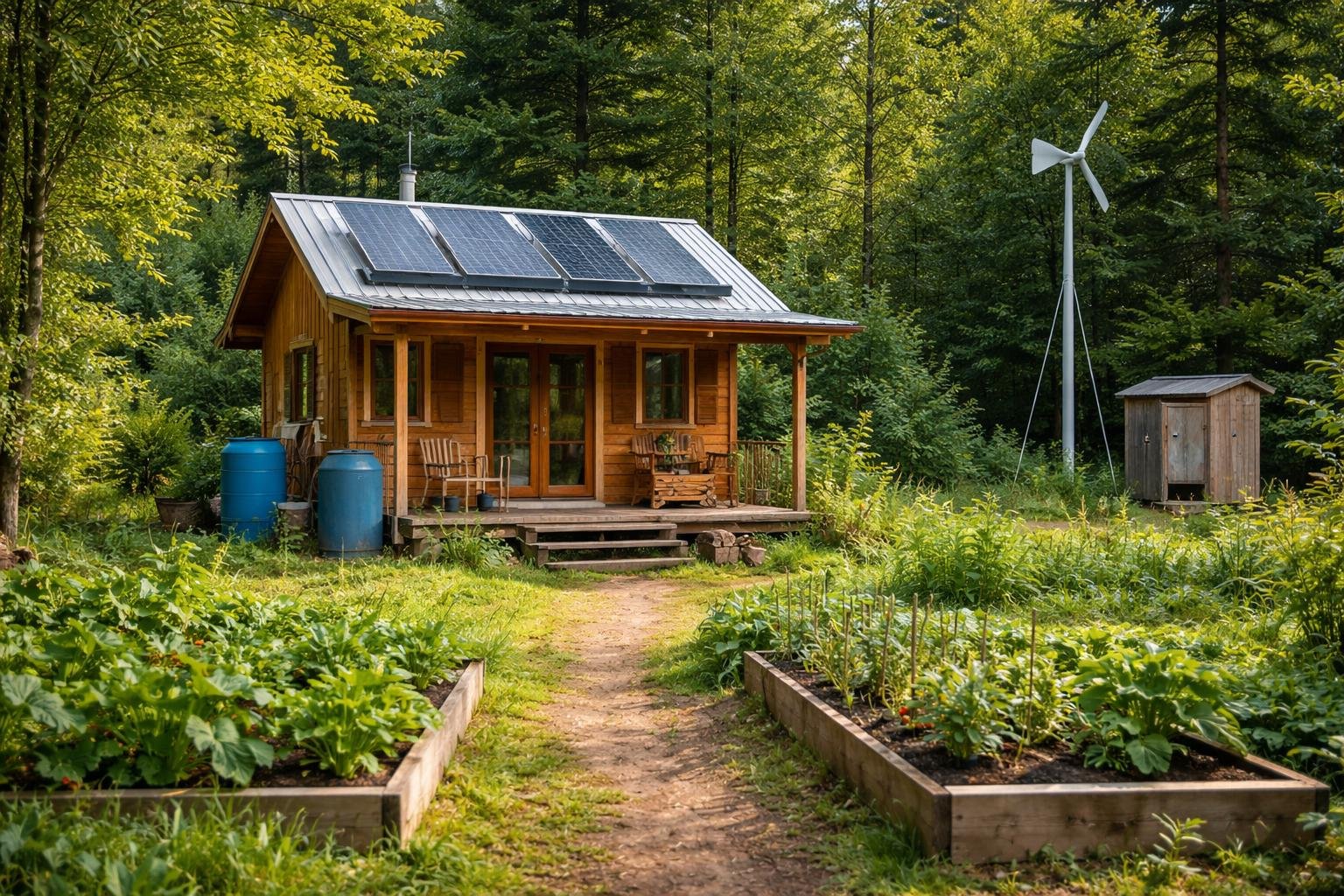
Your cabin needs reliable power, light, and heat to function year-round. Setting up renewable energy sources and efficient utilities keeps costs low while maintaining comfort.
Solar, Wind, and Micro-Hydro Power Options
Solar panels are the most popular choice for powering a solar powered cabin because they’re affordable and easy to install yourself. A basic 1-3 kW system costs between $3,000 and $8,000 and can handle most daily needs in a small cabin.
You’ll need panels, mounting hardware, and wiring to get started. Wind turbines work well if you live in an area with consistent winds above 10 mph.
Small residential turbines cost $1,500 to $5,000 but require more maintenance than solar. They’re best used alongside solar panels to generate power during cloudy days or at night.
Micro-hydro systems generate electricity from flowing water on your property. If you have a stream with decent flow year-round, a micro-hydro system can produce steady power 24/7.
Installation costs range from $5,000 to $15,000 depending on the setup. Micro-hydro power is ideal for remote locations with reliable water sources.
Most budget-conscious builders start with solar because it has the lowest upfront cost and works almost anywhere. You can always add wind or hydro later.
Battery Banks and Charge Controllers
Your battery bank stores excess power generated during the day for use at night or during bad weather. Lead-acid batteries are the cheapest option at $100-$200 each, but lithium batteries last longer and perform better in cold weather.
For a small solar powered off grid cabin, you’ll need 400-800 amp hours of storage. That typically means 4-8 deep cycle batteries connected together.
Budget around $800 to $2,000 for a basic battery bank. A charge controller prevents your batteries from overcharging and extends their lifespan.
You need either a PWM (pulse width modulation) controller for $50-$150 or an MPPT (maximum power point tracking) controller for $150-$400. MPPT controllers cost more but are 20-30% more efficient, which means you can use fewer solar panels.
Wire everything properly and keep batteries in a ventilated space protected from extreme temperatures. Poor battery care is one of the fastest ways to waste money on your off-grid power system.
Efficient LED Lighting and Off-Grid Heating
LED lighting uses 75% less electricity than traditional bulbs and lasts 25 times longer. You can light your entire cabin with 50-100 watts of LED bulbs instead of 400-500 watts with incandescent.
Budget $100-$200 for all your lighting needs. Off-grid heating depends on your climate and budget.
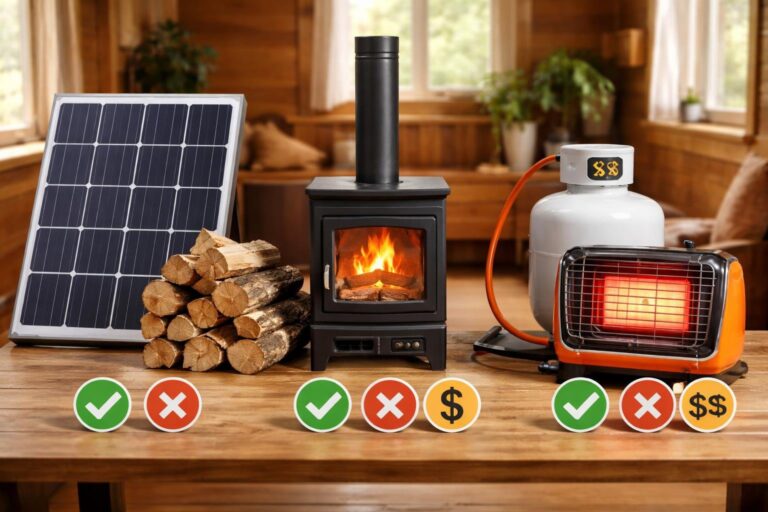
A quality wood stove costs $500-$2,000 and provides reliable heat if you have access to firewood. Propane heaters work well as backup heat sources and cost $100-$500 plus fuel.
Passive solar heating through south-facing windows reduces your heating needs significantly. Add heavy curtains to trap warmth at night.
Proper insulation matters more than your heating system because it keeps the warmth inside. Combining LED lights with a wood stove creates an efficient setup that uses minimal battery power.
This lets you build a smaller, cheaper solar system while staying comfortable year-round.
Water, Waste, and Resource Management
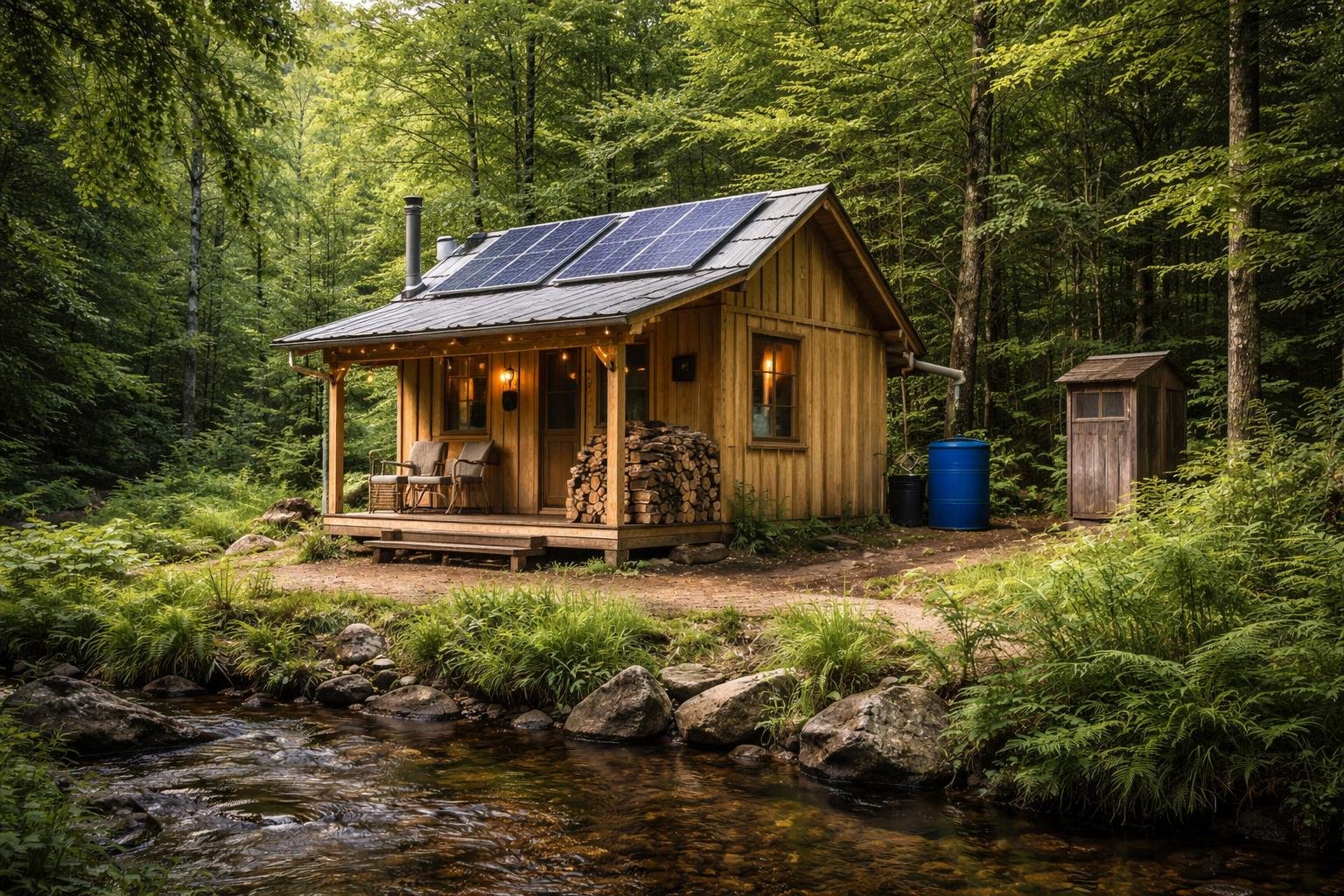
Managing water and waste on a tight budget means working with what nature provides. You can set up rainwater collection for about $200-500, handle greywater with simple gravity systems, and install a composting toilet for $50-1,500 depending on your DIY skills.
Rainwater Catchment and Water Harvesting
Your roof is your best water source when you’re building off-grid on a budget. A basic rainwater catchment system includes gutters, downspouts, a storage tank, and a first-flush diverter that removes debris and bird droppings before water enters your tank.
For a small cabin with a 400 square foot roof, you can collect roughly 250 gallons of water from just one inch of rainfall. That’s enough for several days of careful use.
You’ll need food-grade barrels or IBC totes for storage. Used IBC totes cost $50-100 each and hold 275 gallons.
A gravity-fed water system works well if you can elevate your storage tanks above your cabin.
Budget setup:
- 2-3 IBC totes: $100-300
- Gutters and downspouts: $100-150
- First-flush diverter: $30-80
- Basic filtration: $50-100
Screen your gutters to keep leaves out. Install your first-flush diverter at the first downspout to protect water quality from the start.
Water Purification and Greywater Recycling
Raw rainwater needs treatment before drinking. Budget-friendly purification starts with a simple sediment filter ($20-40) followed by either ceramic filters, UV treatment, or boiling.
A two-stage approach works best. First, run water through a 5-micron sediment filter to remove particles.
Then use a countertop gravity filter ($150-250) or boil water for drinking and cooking. Greywater recycling lets you reuse water from sinks and showers for your garden or toilet flushing.
The simplest system is a bucket brigade, but you can build a basic greywater system for under $200. Run your sink drain into a bucket with a mesh filter.
Use this water within 24 hours for plants or fruit trees. Don’t store greywater longer or it starts to smell and breed bacteria.
For a more permanent setup, build an off-grid water system with separate greywater and blackwater lines. This costs more upfront but saves water long-term.
Composting Toilets and Waste Management Systems
Composting toilets save thousands of gallons of water yearly and eliminate the need for expensive septic systems. You can build a basic composting toilet for $50-150 or buy a manufactured unit for $900-1,500.
A DIY bucket composting toilet is the cheapest option. You’ll need a 5-gallon bucket, a toilet seat that fits the bucket ($20-30), and cover material like sawdust or peat moss.
After each use, add a scoop of cover material. When the bucket fills (usually 2-3 weeks for one person), empty it into a dedicated composting bin.
Let it break down for 12-18 months before using it on ornamental plants.
Basic composting toilet supplies:
- Toilet seat attachment: $20-30
- 5-gallon buckets with lids: $15-25
- Sawdust or peat moss: $10-20/month
- Outdoor composting bin: $50-100
For waste management systems beyond human waste, set up separate bins for recycling, food scraps, and burnables. Compost all food waste and use it in your garden.
This reduces trash volume by 30-50% and creates free fertilizer.
Maximizing Comfort and Self-Sufficiency
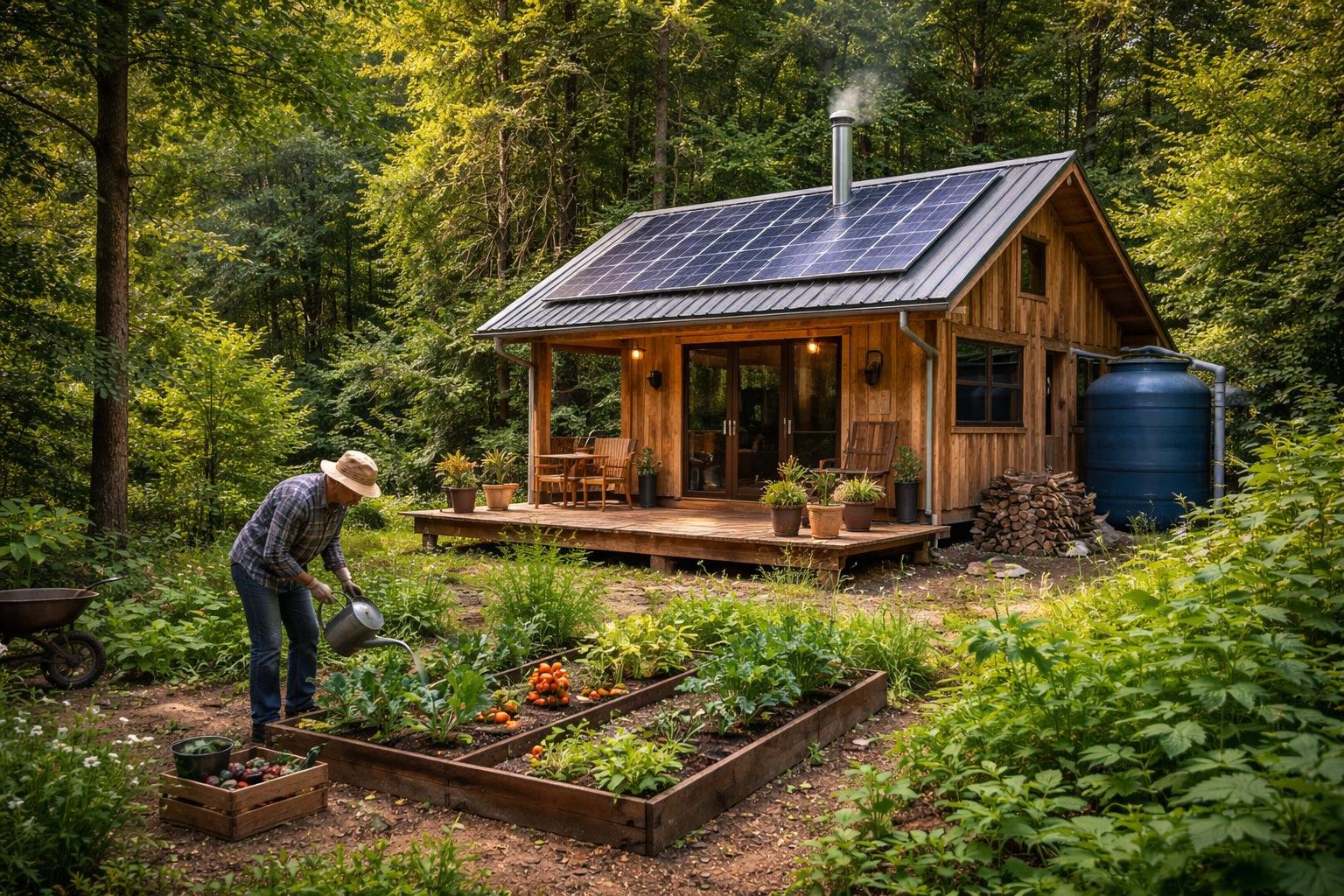
Smart design choices and careful planning help you create a comfortable living space while reducing ongoing costs. Proper insulation and solar orientation keep your cabin warm in winter and cool in summer without burning through energy resources.
Passive Solar Design and Insulation Choices
Your cabin’s orientation makes a huge difference in how comfortable it stays year-round. Place your largest windows on the south side to capture maximum sunlight during winter months.
South-facing windows let natural light flood your space while providing free heat when you need it most. Thermal mass materials like concrete floors or stone walls absorb heat during the day and release it slowly at night.
This keeps temperatures more stable without using any power. Eco-friendly insulation options help you stay warm without breaking your budget.
Straw bales offer excellent R-value and cost very little if you source them locally. Sheep’s wool is another natural choice that regulates moisture while keeping heat inside.
Focus on sealing gaps around doors and windows first. Air leaks waste more energy than any other factor in living off-grid.
Use weatherstripping and caulk to stop drafts before they start.
Creating a Productive Greenhouse or Garden
Growing your own food is essential for true self-sufficiency on an off grid homestead. Start with a small greenhouse attached to your cabin’s south wall to extend your growing season by several months.
A basic 8×10 foot greenhouse provides enough space to grow tomatoes, peppers, herbs, and leafy greens year-round in most climates. Use recycled windows or clear plastic sheeting to keep costs down while still letting sunlight through.
Raised garden beds require less bending and give you better control over soil quality. Build them from untreated lumber or stacked stones found on your property.
Fill beds with a mix of compost, native soil, and aged manure. Focus on these high-yield crops for maximum food production:
- Potatoes and root vegetables
- Beans and peas for protein
- Squash and zucchini
- Leafy greens like kale and spinach
Collect rainwater from your roof to irrigate your garden without tapping into your drinking water supply.
Space Optimization: Sleeping Lofts and Small Cabin Living
A sleeping loft doubles your usable floor space in a small cabin in the woods without adding much to construction costs. Build your loft above the kitchen or bathroom area where ceiling height matters less.
Keep your loft ceiling at least 3 feet high so you can sit up comfortably in bed. Install a sturdy ladder or space-saving ship’s stairs to access your sleeping area safely.
Smart storage solutions:
- Built-in drawers under your bed frame
- Wall-mounted shelves instead of bulky furniture
- Hooks on every available wall for coats and bags
- Fold-down tables that tuck away when not in use
Multi-purpose furniture helps you live off grid without feeling cramped. A dining table that converts to a work desk saves precious square footage.
Storage benches provide seating plus hidden space for tools and supplies. Keep your main living area open and uncluttered.
You’ll feel more comfortable in a smaller space when you can move around easily and everything has its designated spot.
Frequently Asked Questions
Building an off-grid cabin raises questions about costs, legal issues, and construction methods. Most builders can start for as little as $1,000 using salvaged materials and basic hand tools, though avoiding common planning mistakes saves money in the long run.
What’s the cheapest way to build a cabin in the woods?
The cheapest way involves using free materials from nature and salvaged items. You can harvest timber from your land, collect stones for foundations, and gather mud or straw for insulation.
Salvage yards offer old doors, windows, and metal roofing at low prices. Many builders also find free shipping pallets from freight companies and hardware stores to use as wall cladding.
Doing all the labor yourself cuts costs dramatically. A small off-grid cabin can cost as little as $1,000 if you’re willing to put in the work and get creative with materials.
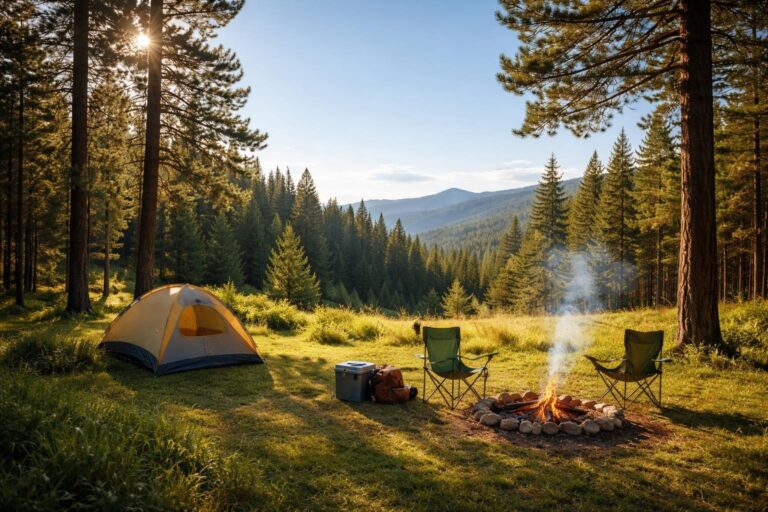
Living on-site while you build saves commuting costs and speeds up the project. You’ll need basic camping gear and maybe a large tent to use as temporary shelter during construction.
What are some common mistakes to avoid when building off-grid cabins?
Skipping proper site research leads to major problems down the road. You need to check local building codes before starting construction since different counties have different rules about cabin size and utilities.
Poor cabin orientation wastes energy and money. Your cabin should face the right direction to maximize solar power and natural light while protecting against harsh weather.
Forgetting to budget for transportation costs catches many first-time builders off guard. Getting heavy materials to remote locations adds up quickly, so you need to factor in truck rentals or delivery fees.
Underestimating insulation needs creates uncomfortable living conditions. Your walls, floors, and ceilings all need proper insulation to keep heating and cooling costs low.
Not planning for water collection and waste management from the start causes headaches later. Your roof design should include rainwater harvesting capabilities, and your sewage system must meet local codes.
How much should I expect to spend on a cozy off-grid cabin?
Your total cost depends on cabin size, materials, and how much work you do yourself. Small cabins built with salvaged materials and your own labor start around $1,000 to $5,000.
A medium-sized cabin using a mix of new and used materials typically runs $10,000 to $50,000. This includes basic off-grid utilities like solar panels and a composting toilet.
Large off-grid cabins can cost over $300,000 when you hire contractors and use premium materials. These bigger builds usually need to meet strict building codes and inspection requirements.
Budget around $2,000 just for a basic solar setup. A complete off-grid solar system includes 400-800 watt panels, batteries, charge controller, and inverter.
Set aside extra money for unexpected costs and hired help. You might need an expert for tricky jobs like electrical work or foundation pouring.
Can you really live off-grid legally in the States, or is that just a myth?
Yes, you can legally live off-grid in most U.S. states. However, each state and county has its own rules about building codes, sewage systems, and power generation.
Some states make off-grid living easier than others. Alabama, Missouri, Georgia, Tennessee, and Texas rank among the top off-grid-friendly states due to relaxed regulations and lower property taxes.
Building codes become stricter as cabin size increases. Small cabins often fly under the radar, but larger structures need official permits and inspections.
Your sewage system must comply with local health codes everywhere. You can’t just dump waste anywhere, even on your own property.
Some areas restrict how you generate electricity or collect rainwater. Check with your county’s building department before buying land to avoid legal issues.
Is it a smarter move to build a cabin from scratch or go for those cabin kits?
Building from scratch gives you complete control over design and costs. You can use free salvaged materials and adjust your plans as you go based on what you find.
Cabin kits cost more upfront but save time and reduce guesswork. They come with pre-cut lumber and detailed instructions, which helps if you’re new to construction.
Scratch-built cabins let you work at your own pace and budget. You can stop when money runs low and restart when you save more cash.
Kits require more upfront capital but faster completion times. You’ll need the full kit payment ready before starting, unlike gradual material purchases for scratch builds.
Your skill level matters when choosing. Beginners might appreciate kit instructions, while experienced builders often prefer the freedom of starting from zero.
What’s the best approach to build a cabin if I don’t have fancy tools?
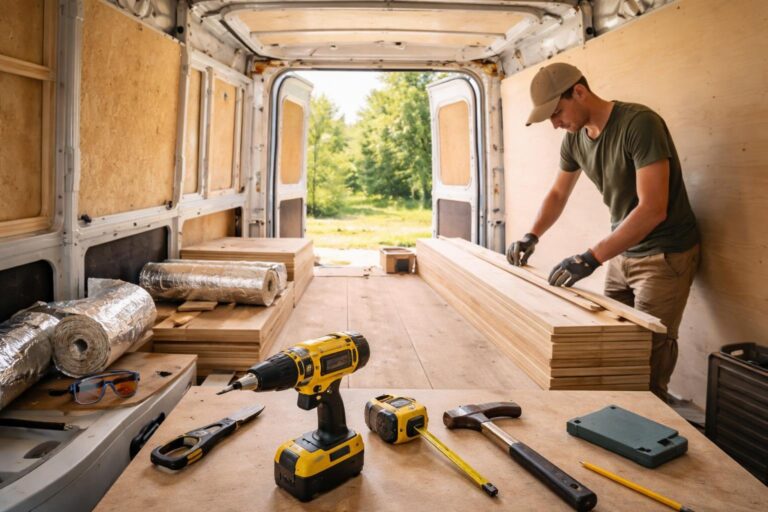
Hand tools work fine for small cabin projects. You can build with basic items like a hammer, saw, drill, level, and measuring tape.
Buy used power tools to speed up work without breaking the bank. Old drills, circular saws, and sanders from garage sales or online marketplaces work just as well as new ones.
Rent heavy equipment only when absolutely necessary. Excavators and concrete mixers cost less to rent for a few days than to buy outright.
A chainsaw becomes essential if you’re harvesting timber from your land. This single tool lets you fell trees, cut logs to length, and even mill lumber with the right attachment.
Borrow or rent specialized tools you’ll only use once. Tools like post hole diggers or nail guns make sense to rent rather than purchase for occasional use.